The Third Act

We have lost
something.
We know exactly
where to find it.

It's not in the mountains. It's not at the spa. It's five minutes from where you already are.

Read on
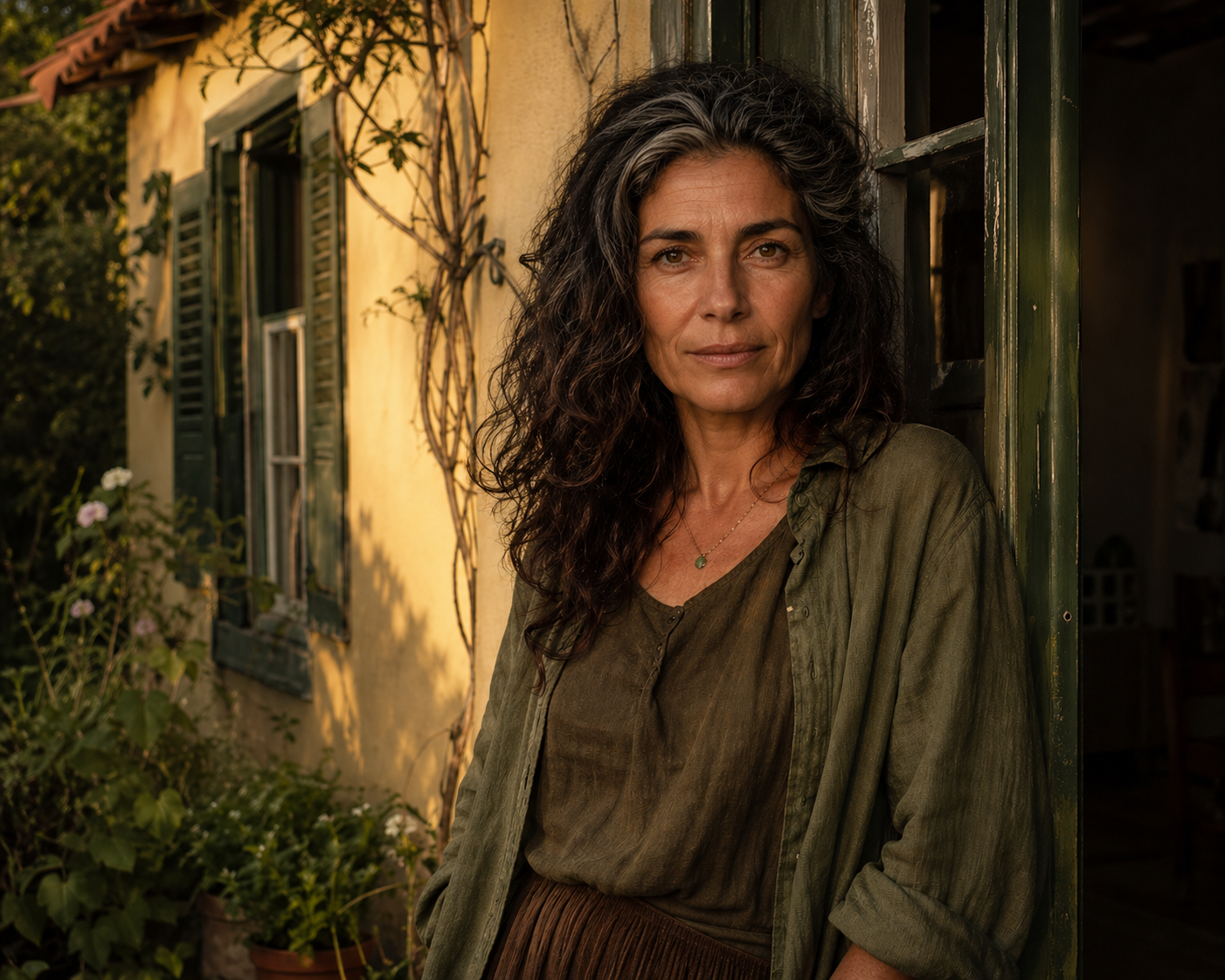
Hazel Wise
Hazel Wise
Voice of Chez 600 · Est. 2026
A Word from Hazel

I have been keeping time in this house longer than anyone. I know how the light moves through the kitchen in the morning and what the garden smells like after rain. I know which corner of the lounge holds a conversation and which chair people fall asleep in.

I know what people say when they arrive here for the first time. They say: I didn't know I needed this. They say: why doesn't every neighborhood have one of these.

They are not wrong. Every neighborhood used to.

The Lineage

This is not a new idea.
It is a forgotten one.

For most of human history, there were places that belonged to the community — not to commerce, not to the state, not to any single household. Places where you went to think, to make, to argue, to eat, to belong. We had many names for them. We have mostly stopped building them.

5th century BC Athens,
Greece
The Agora

The open marketplace at the heart of the Greek city — not just for commerce, but for philosophy, politics, and public life. Socrates held court here. Citizens argued, traded, and governed in the same space. The agora was not a destination. It was the center of everything.

12th–18th century Medieval &
Renaissance Europe
The Guild Hall

Craftspeople, merchants, and artisans gathered not merely to do business, but to set standards, share knowledge, mentor apprentices, and hold the civic fabric together. The guild hall was where a trade became a community. Where skill was passed hand to hand.

17th–19th century Paris, London,
Vienna
The Salon

In the drawing rooms of Europe, ideas that shaped the Enlightenment were argued over dinner. The salon was a third space that belonged to no institution — hosted, usually, by a woman who understood that the right people in the right room, fed and at ease, could change everything. Voltaire. Rousseau. Mary Wollstonecraft. The salon was where they sharpened their thinking.

1889–present Chicago,
United States
Hull House

Jane Addams opened Hull House on the Near West Side of Chicago as a settlement house — a place where neighbors could learn, create, organize, eat together, and recover the dignity of community life. It housed a theater, a gymnasium, a pottery studio, a music school, a labor museum. It changed American civic life. It was also, at its heart, simply a house where people were welcome to come in.

Chez 600
Est. 2026 · Saint Paul, Minnesota

An original 1900 house on the corner of Hartford and Saratoga. A movement studio, an art loft, a working garden, a bathhouse, four retreat rooms, and a kitchen built for long meals. A community anchored by lunar rhythm and seasonal gathering. The civic institution your neighborhood has been missing — here, in the city, five minutes away.

What We Lost

"We don't need to go further. We need somewhere to go."

The loneliness epidemic is real. But the diagnosis is usually wrong. The problem is not that people are isolated. It is that the places that used to hold people together — without transaction, without agenda, without a reason — have quietly disappeared. And no app has replaced them.

You want to make something with your hands. But the mess that art supplies make at home discourages the actual creation. You need somewhere to go where the mess is the point.

You read the book. You have thoughts about it. You have no one to have that conversation with — not because no one read it, but because there is no room where the conversation happens.

You want to move your body, slowly, intentionally, without being timed or measured or enrolled in a program. You want movement that is practice, not performance.

You want to go somewhere that is not home and not work — somewhere you don't have to pay to sit down, and you don't have to worry about the vibe, because the vibe was built for you.

You want to eat at a long table with people you like, food grown from the ground you're standing on. You want the meal to be the thing itself — not the occasion for something else.

You want to retreat. But you don't have a week. You don't have the budget for Sedona. You need the retreat you can actually get to.

The Answer

Not a spa.
Not a co-working space
with plants.
A civic institution.

Chez 600 belongs to the lineage of places that hold people together — the agora, the salon, the guild hall, the settlement house. It is not a product. It is not a subscription. It is a commons. And like all commons, it requires a founding circle of people who understand that what they are building is not for themselves alone.

  • A place to make things, without apologizing for the mess
  • A table long enough for everyone who shows up
  • A garden that feeds the people who tend it
  • A room where the conversation you've been meaning to have finally happens
  • A retreat you don't have to fly to
  • A community that holds you, in the city, in the rhythm of actual life
Est. 2026 · Saint Paul, Minnesota
600
Saratoga Avenue
Hartford & Saratoga · Saint Paul · MN
Founding Circle Open · 30 Seats · Permanent
What the founding circle builds
A movement studio, art loft, hammam bathhouse Built
Four retreat rooms, a 1900 house, a kitchen Built
A working garden, a community, a rhythm Built
Something their city has been missing Restored
Four Things That Are True
01
Micro-community development is happening everywhere. Mostly in rural places.

The movement toward intentional community, shared land, and cooperative living is real and growing. What almost no one is doing is building it in the city — where the density already exists, where the need is acutest, and where the commute to belonging should be five minutes, not five hours.

02
The eyes light up every single time.

When people hear about Chez 600, they don't ask questions. They say: I want that. They say: when can I come. They say: why doesn't my neighborhood have this. The idea does not need to be sold. It needs to be built. The market has already spoken — in every conversation, in every lit-up face.

03
The retreat you can actually get to is the one that changes your life.

The yoga retreat in Costa Rica is real. The silent meditation in Vermont is real. But most people don't go — not because they don't want to, but because life doesn't allow it. The transformation that happens in weekly rhythm, in slow meals, in a garden you tend every Saturday, accumulates differently. It changes you by being ordinary.

04
This is Site One.

What is built at 600 Saratoga is the proof of concept for something that belongs in every city. The operating model, the programming rhythm, the practitioner framework, the founding circle structure — all of it becomes the blueprint. The founding circle at Chez 600 is not just building a community. They are building the first one.

The Invitation

Your city needs this.
Your neighborhood
is ready.

The founding circle is open. Thirty seats. Permanent. There will never be another founding circle at Chez 600.

"The door at 600 Saratoga has been opening and closing for over a hundred years. It has held families, arguments, meals, grief, and celebration. It knows how to hold a community. It is waiting to hold yours."

— Hazel Wise · Chez 600